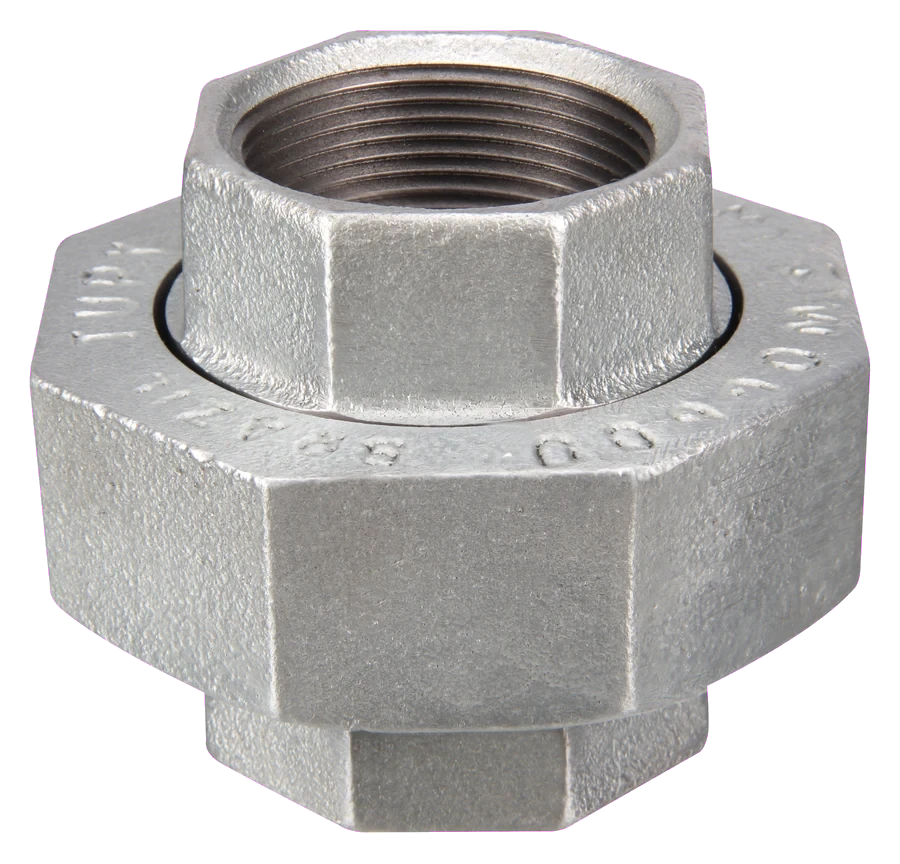
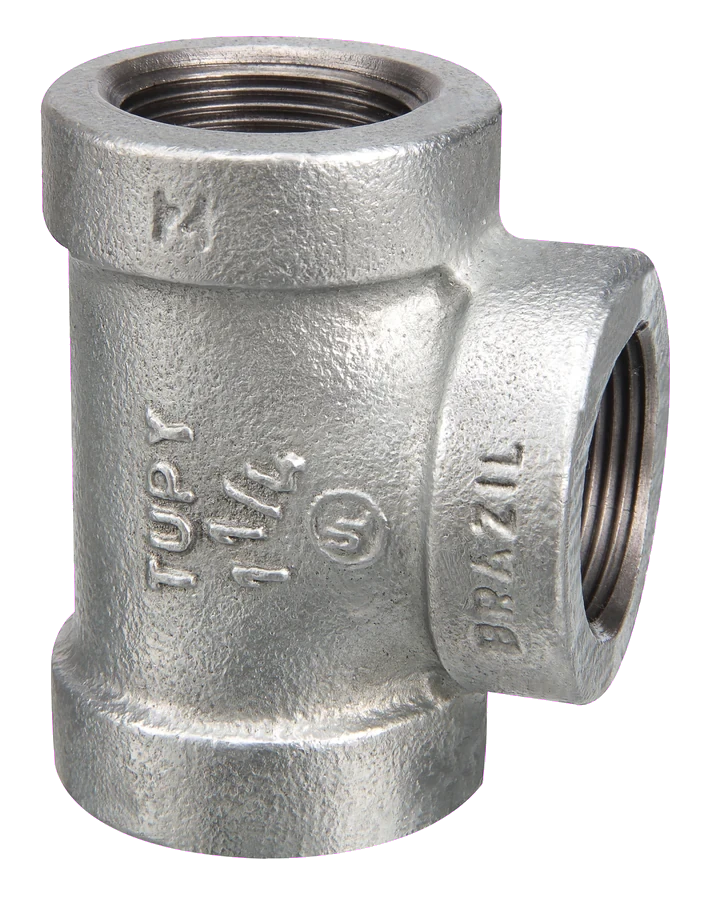
A drawing says DN 25. The BOQ says 1". The supplier's list says 25 mm. Someone measures a fitting with a caliper, reads 33 mm, and orders 32 mm. Four numbers, one fitting, and only three of them are the same thing.
Pipe sizing is the most reliable source of ordering errors in the trade, and almost all of them come from the same root: the size on a threaded fitting is a name, not a measurement. This is how the naming works, and how to get from something you can physically measure back to the size you should order.
The size is a label, not a dimension
Threaded pipe and fittings are sized by nominal bore — also called nominal size, nominal diameter, or NB. It is an approximate reference to the inside diameter of the pipe the fitting is made for, fixed a very long time ago when wall thicknesses were different from today's.
It has since stopped corresponding to anything you can put a rule across. A 1in fitting has no dimension of one inch. Its bore is not 25.4 mm, and the outside of its thread is nowhere near it either. The number survives because everyone in the chain uses the same one, not because it describes the part.
| Term | What it means | Measurable? |
|---|---|---|
| NB — nominal bore | The traditional size name, roughly the old inside diameter | No |
| DN — diamètre nominal | The same size name in metric form; DN 25 is the 1in size | No |
| NPS — nominal pipe size | The American equivalent of the same label | No |
| OD — outside diameter | The actual outside of the pipe or the thread | Yes |
DN, NB and NPS are three names for the same labelling system. DN 25, 25 mm nominal, NB 25 and 1in all specify the same size. Only OD is a real measurement.
The conversion that catches people out
Because DN numbers look metric, they get read as millimetre measurements — and then compared against a caliper reading, which is an outside diameter. The two never agree, and the gap is large enough to make a wrong order look plausible.
Measure the outside of the male thread on a 1in fitting and you will read roughly 33 mm. Nothing on that fitting measures 25. So a reading of 33 mm looks like it might be a 32 mm size — and 32 exists in other systems, which is what makes the mistake stick.
The rule that prevents it: never convert a caliper reading into a size directly. Measure the OD, then look it up.
Going from a measurement back to a size
If you have a fitting or a length of pipe in your hand and no paperwork, the sequence is:
- Measure the outside diameter of the male thread with a caliper, at the widest point, avoiding a damaged or burred end.
- Look that OD up against the thread standard rather than dividing by 25.4. The relationship between nominal size and thread OD is a table, not a formula.
- Count the threads per inch if the size is ambiguous. Thread pitch separates sizes that have similar diameters and separates BSP from NPT.
- Confirm the thread form. BSP is 55°, NPT is 60°; taper or parallel is a further distinction.
The thread guide works through this in detail, including identifying a thread with go/no-go gauges rather than by eye.
Reducing fittings: read the order carefully
A reducing fitting carries more than one size, and the order in which those sizes are written is a convention rather than an accident. Get it backwards and you receive a fitting that is correct in every respect except the way round it is.
For a reducing tee, the run is given before the branch, and the run is given largest first. A tee written 1in x 1in x 1/2in has a one-inch run with a half-inch branch. Written 1in x 1/2in x 1in it means something else entirely, and both will be quoted without comment because both exist.
For a reducing socket or bush, the larger end is named first. Where a drawing is ambiguous, name the sizes in the order the flow takes them and say so in words on the order — it costs a line and saves a delivery.
Where wall thickness enters
Nominal size does not tell you the wall thickness of the pipe, which is set separately by a class or schedule. Two pipes of the same nominal size and the same outside diameter can have different bores and different pressure ratings.
For threaded fittings, the practical consequence is that the fitting is sized to the outside of the pipe, because that is where the thread is cut. A change in wall thickness changes the bore, not the thread, so the same fitting serves. That is why fittings are ordered by nominal size alone while pipe needs a class as well.
The sizes to have in front of you
TUPY threaded fittings run from 1/4in to 6in in BSP, and in NPT in Class 150 and Class 300. Rather than a table that ages, the dimensions page publishes every figure and every size with its centre-to-end dimensions in millimetres and its weight in both galvanised and black, generated from the catalogue. For a BOQ, that is the page to work from — the weights in particular, since freight on a fittings order is usually decided by weight rather than by count.
A short checklist before an order goes out
- Sizes stated as nominal — DN, NB or inches — and not as a measured diameter.
- Thread standard named: BSP or NPT, and for NPT the class.
- Reducing fittings written largest first, run before branch, with the intent spelled out where a drawing is unclear.
- Figure numbers quoted, not descriptions.
- Finish stated: galvanised or black.
- Any caliper reading treated as an OD to be looked up, never converted.
In short
DN, NB and NPS are the same label in three dialects, and none of them is a measurement. The only number you can take with a caliper is the outside diameter, and it has to be looked up rather than converted. Get those two ideas straight and most sizing errors disappear — including the expensive one where a whole delivery is the right fitting in the wrong system.
Every figure with its trade names is cross-referenced here, and quotations take figures, sizes and quantities.