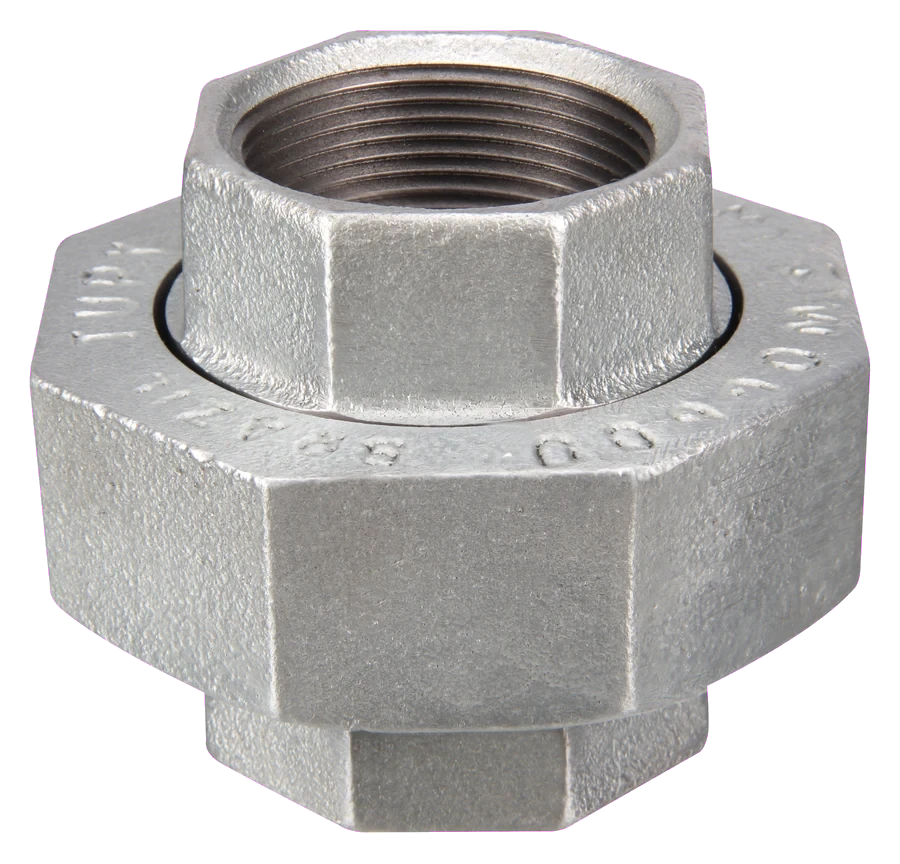
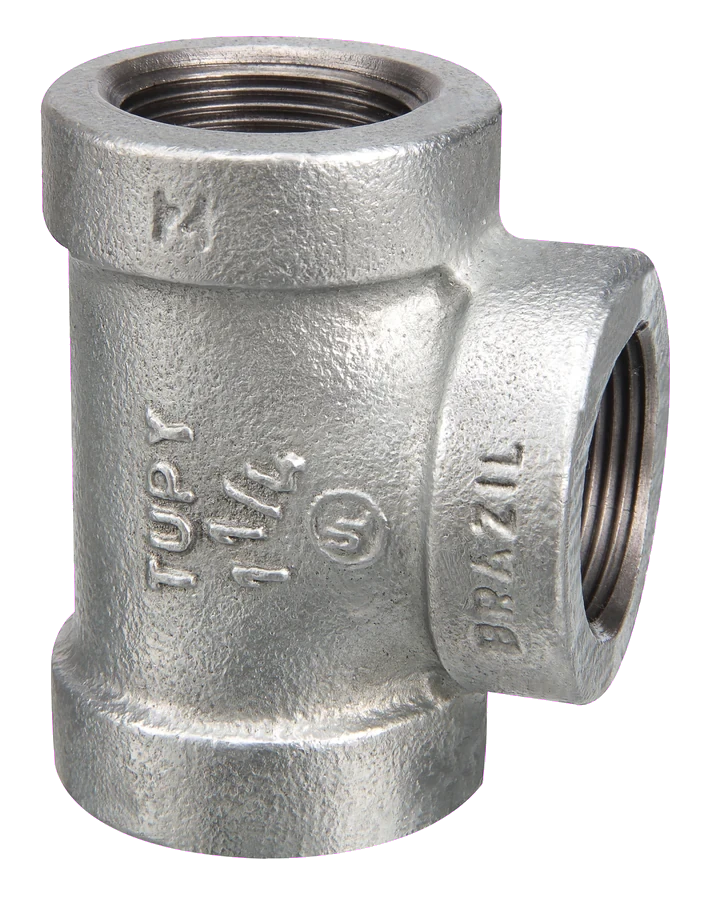
What exactly do pipe fittings do?
In any piping system the pipe is only the route; what decides whether the system stays sealed happens at the fittings. Every elbow, tee or socket is a mechanical joint that has to do two things at once: hold the pipe in position and seal the path the fluid travels along.
That is why, when piping failures are investigated, most leaks turn out to be at the fittings rather than in the body of the pipe. Choosing the right fitting is the cheapest insurance you can buy for a project.
Material: malleable cast iron against ordinary cast iron
The most important decision is the material. Ordinary cast iron (grey cast iron) is brittle; it breaks under impact and vibration, and it gives no warning first. Malleable cast iron (Malleable Iron, MI) is produced by a long heat treatment and behaves quite differently: instead of breaking, it deforms.
That difference shows itself in three situations:
- During installation: a malleable cast iron fitting takes the tightening torque of a wrench without cracking.
- Under water hammer: the sudden pressure surge in water and fire protection lines will finish off a brittle fitting.
- Under vibration: in plant rooms and industrial lines, constant vibration gradually fatigues a brittle fitting.
For gas, steam and fire protection lines, malleable cast iron is the default choice and many standards require it.
Coating: galvanised or black?
After the material comes the coating. A "black" fitting is malleable cast iron with no coating, and a "galvanised" fitting is coated by hot dipping in molten zinc.
The rule is simple: wherever there is moisture, buy galvanised.
- Galvanised: hot and cold domestic water lines, fire protection systems, outdoor runs, and damp or corrosive environments.
- Black: gas, steam, compressed air and oil lines, and closed heating circuits in which no free oxygen circulates.
The cost difference between galvanised and black is usually a few per cent; the cost of replacing a corroded line above a false ceiling is many times that.
Thread: BSP or NPT?
These two thread standards are not compatible, and confusing them is one of the most common causes of leaks.
- BSP (British standard): 55° flank angle, rounded crest. The standard commonly used across the Middle East and Europe.
- NPT (American standard): 60° flank angle, sharp crest. Used on oil, gas and petrochemical projects written to American specifications.
The two look very similar and are hard to tell apart with an untrained eye. If you run a BSP thread into an NPT one it will tighten over the first few turns and feel as though the job has been done properly — but full contact has not been made and the joint will leak sooner or later.
Take the standards seriously
Three main standards should appear on the product data sheet:
- EN 10242 — the European standard for malleable cast iron threaded fittings; dimensions, thread and working pressure.
- ISO 49 — the equivalent international standard, for fittings with BSP threads.
- ASME B16.3 — the American standard for malleable cast iron fittings with NPT threads, in classes 150 and 300.
A fitting that references none of these carries no guarantee at all about its dimensions or its working pressure.
Figure number and sizing
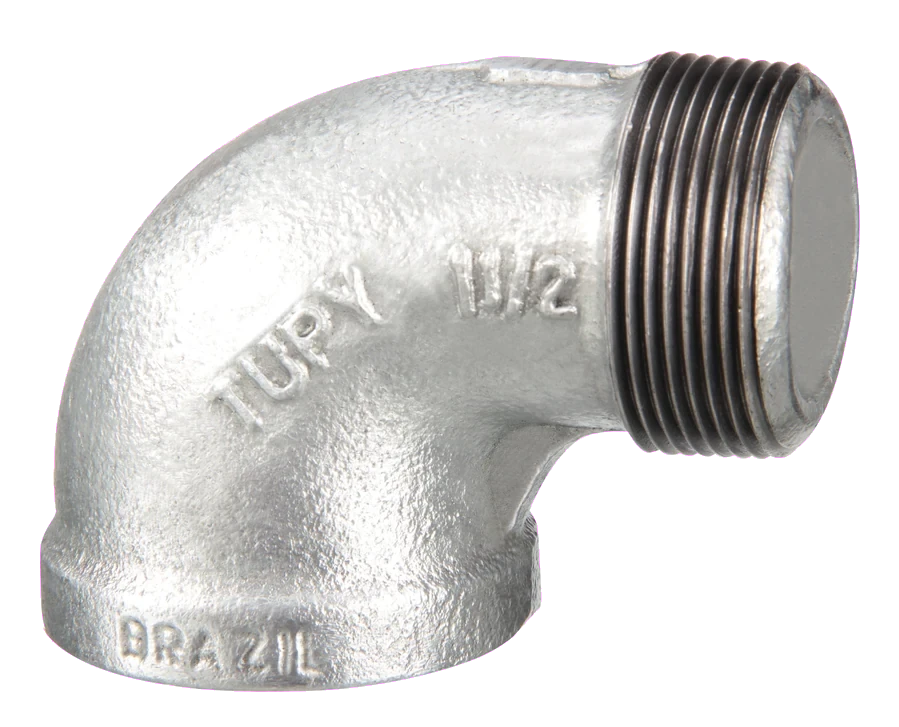
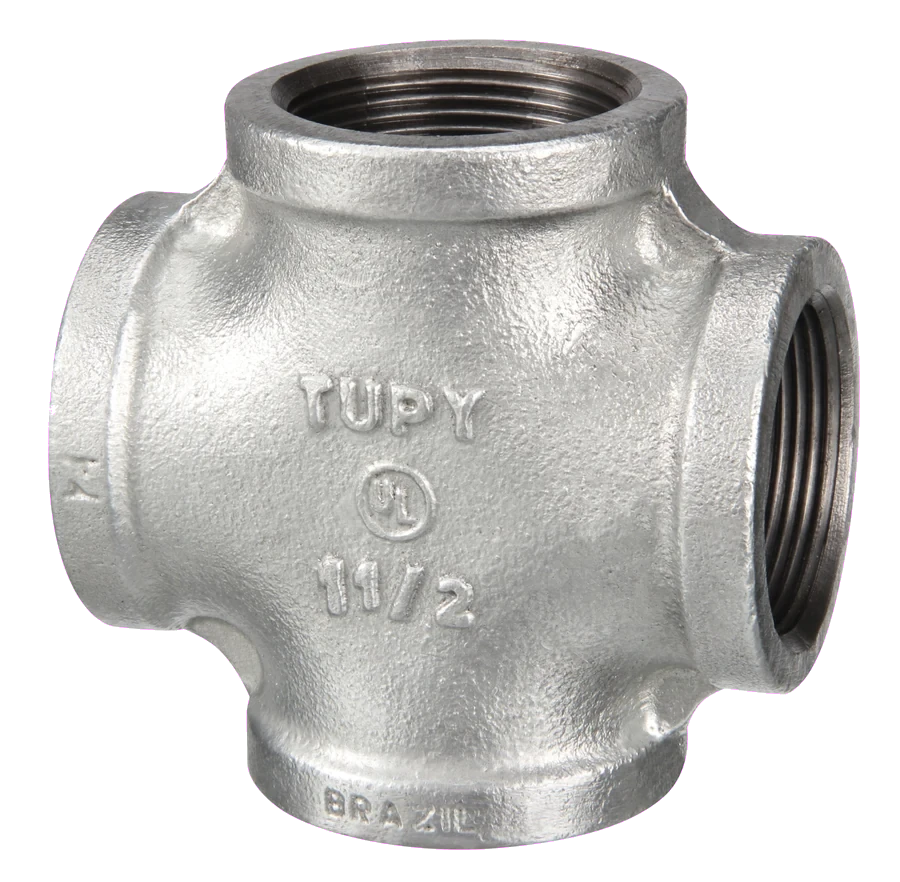
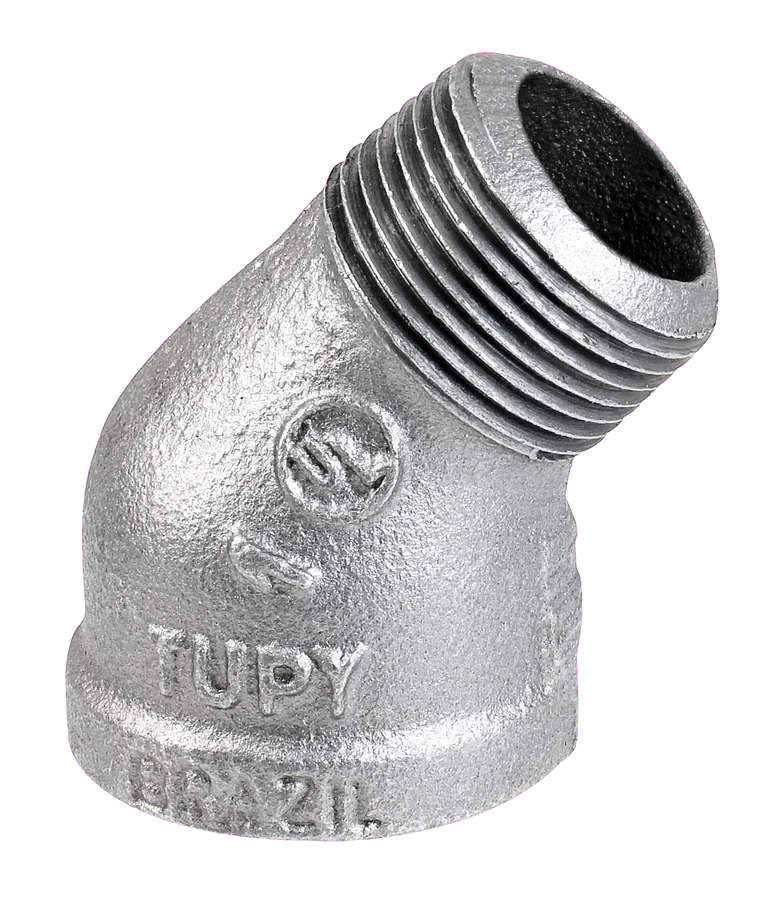
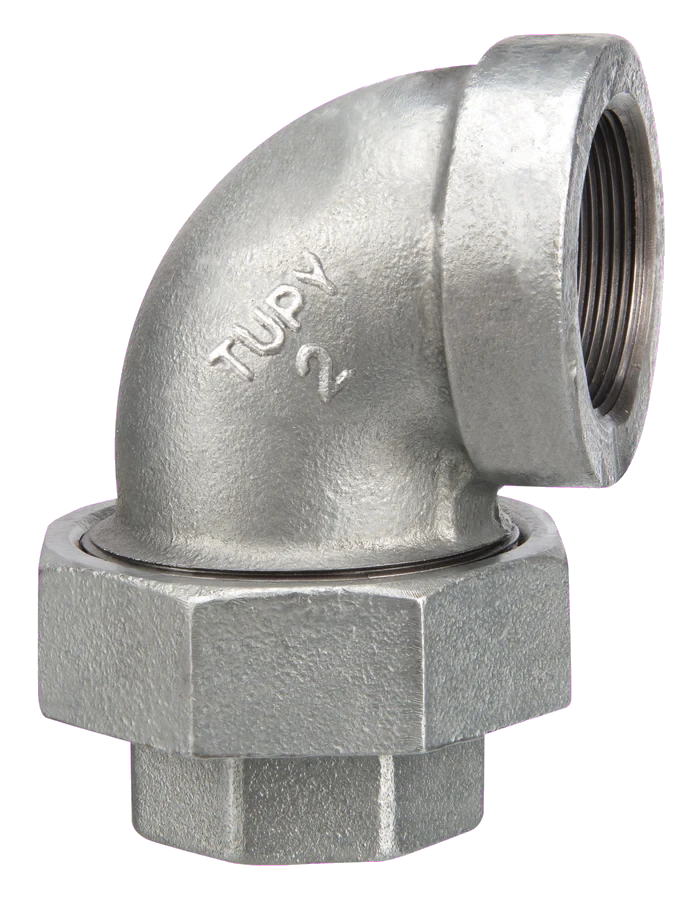
Every fitting shape has a fixed "figure number" that is the same at every reputable factory. Figure 90 is the 90° elbow, figure 130 the tee and figure 270 the socket. Ordering by figure number reduces the chance of a mistake to almost nothing.
The usual size range runs from 1/4 inch to 6 inch. Note that the size of a fitting is stated as the nominal bore of the pipe, not its outside diameter.
Checklist for buying pipe fittings
- Is the fitting malleable cast iron? (not ordinary cast iron)
- Does the coating match the duty of the line? (galvanised for water, black for gas and steam)
- Is the thread standard the same as the rest of the system? (BSP or NPT — not a mix)
- Are the manufacturer name and size cast into the body of the fitting?
- Does the data sheet state the working pressure and the reference standard?
- Is the figure number written on the invoice?
Summary
Choosing pipe fittings comes down to three decisions: material, coating and thread. Get those three right and the rest is a matter of good workmanship. Economising at this stage almost always costs more than the fitting itself.
For technical specifications, dimension tables and the figure number of each fitting, see the products page. The official catalogues are also available in full, and you can request a quote for the figures and sizes you need. If you want to know which standards the products are made and inspected to, see the standards page.